Key Takeaways
| Nutritional Highlights | Microgreens stand out for their concentrated nutrients, offering abundant vitamins, minerals, and antioxidants. | Sprouts, while nutritious, may not match the same nutrient density. |
| Safety Considerations | Microgreens grown in soil or controlled environments generally carry fewer microbial risks than sprouts, which are susceptible to contamination during sprouting. | |
| Cultivation Contrasts | Microgreens require soil or growing medium and specific environmental conditions, making them ideal for indoor gardening. | Sprouts can be grown in water with minimal light and are a beginner-friendly option. |
How to Grow Sprouts
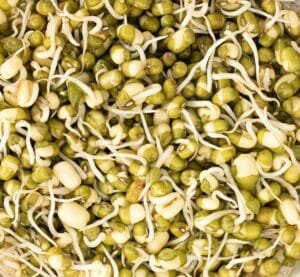
Sprouts are a little easier to start than are microgreens. All you need for sprouting is a mason jar, a sprouting lid, a tablespoon of seeds, water, and counter space. Or you can use a stackable sprout trays, this is what I use.
Place the tablespoon of seeds in the jar, fill it with water, and screw on the sprouting lid. Let soak for about 24 hours, and then drain the water out, leaving the jar inverted over a grate in the sink so it can drain and fresh air can get in. Every day thereafter, rinse with water twice a day and immediately drain. About a week later, you can enjoy almost an entire jarful of fresh sprouts.
How to Grow and Harvest Microgreens
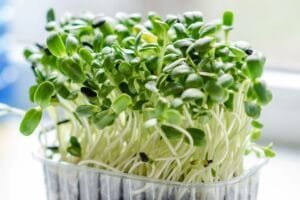
Growing microgreens requires a growing medium, either soil based such as potting soil or in a soil less medium such as in peat moss, vermiculite or growing mats. Microgreens require direct sunlight or artificial light to grow. They are harvested when they’re a few inches tall, cut right at the soil line.
Most microgreens take about 2 to 3 days to germinate. They usually need roughly 7 to 14 days to be ready for harvest. Growers may choose to cultivate until the first true leaves emerge. It can take as long as 25 days. But the later the harvest time, the stronger the taste and less tender.
Health Risks
The FDA officially classifies raw sprouts as a high-risk food. The reason is simple: sprouts are grown in warm, dark, humid conditions, which happen to be exactly the conditions where bacteria like Salmonella, E. coli, and Listeria multiply fastest.
Because the entire sprout is eaten, any contamination on the original seed has a direct path to your plate. The FDA’s guidance specifically recommends that children, the elderly, pregnant women, and immunocompromised individuals avoid eating raw sprouts entirely. Cooking sprouts significantly reduces this risk.